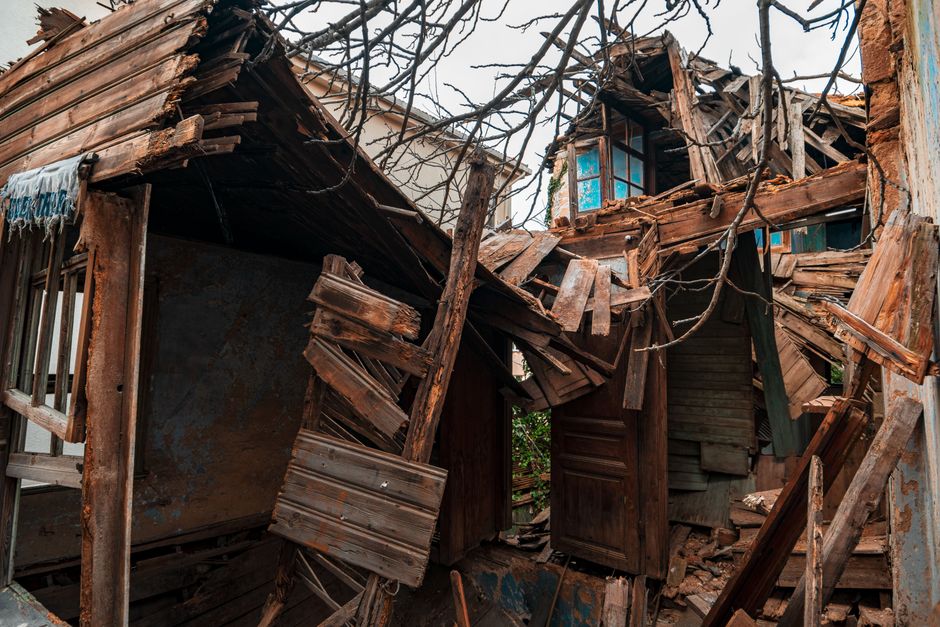
The Cascading Disaster: Why Venezuela’s Second Earthquake Proved More Destructive
When the earth shakes once, buildings can often withstand it. But what happens when it shakes again just hours or days later? This is the devastating question Venezuela faced when a powerful second earthquake struck the region, leaving a trail of collapsed structures and unanswered questions about why some buildings survived while others crumbled to dust.
The Cumulative Effect of Multiple Seismic Events
The most critical factor behind the second earthquake’s destructiveness wasn’t simply its magnitude—it was its timing. When two major seismic events occur in close succession, the structural damage from the first quake becomes a critical weakness during the second. Concrete that developed micro-fractures during the initial tremor becomes more vulnerable. Steel reinforcements that shifted slightly out of position now bear stress unevenly. Foundation materials that settled irregularly create weak points that the aftershock exploits ruthlessly.
Think of it like a bridge that survives one heavy truck but collapses under the second. The first passage doesn’t destroy it, but it fundamentally compromises the structure’s integrity.
Soil Composition: The Hidden Variable
Beyond the timing of successive quakes, the ground itself played a pivotal role in determining which buildings fell and which remained standing. Venezuela’s diverse geology means that different neighborhoods literally stand on different foundations. Some areas sit on bedrock—ancient, compressed stone that transmits seismic waves efficiently but provides stable support. Other regions rest on softer soil composed of clay, sand, and sediment.
When seismic waves reach soft soil, something troubling happens. The ground amplifies the motion, making the shaking far more intense than it would be on solid rock. This amplification effect, combined with a second earthquake, created conditions where buildings literally sank or tilted as the soil beneath them became temporarily unstable—a phenomenon known as liquefaction in extreme cases.
Did you know? Buildings constructed directly on bedrock can experience significantly less amplified shaking than identical structures built just a few blocks away on softer sedimentary soil.
Structural Age and Building Standards
Perhaps unsurprisingly, older buildings suffered disproportionately. Structures built decades ago, before modern earthquake-resistant building codes were established, simply weren’t designed to withstand multiple powerful quakes in rapid succession. Their reinforcement patterns, concrete strength, and joint flexibility couldn’t adapt to the complex stresses involved.
Newer buildings, constructed with contemporary seismic standards in mind, featured flexible joints, better reinforcement distributions, and materials chosen specifically to absorb and dissipate seismic energy. These structures bent and swayed during both quakes rather than breaking apart.
The Interaction Between Ground Motion and Structure
Every building has a natural frequency—a rate at which it naturally vibrates. When seismic waves matching that frequency strike the structure, resonance occurs, amplifying the motion and stress. The first earthquake set buildings oscillating. The second earthquake, arriving before vibrations fully dampened, could synchronize with that existing motion, creating a catastrophic pile-up of energy.
Buildings on soft soil experience lower-frequency seismic waves that can interact particularly badly with mid-rise structures. High-rises feel the shake less intensely due to their flexibility, while shorter buildings on rock might escape damage that taller structures experience on soil sites.
Learning From Venezuela’s Tragedy
The Venezuelan earthquake sequence revealed that earthquake damage isn’t simply about magnitude or a single moment of ground shaking. It’s about the conversation between earth, time, and architecture. Short intervals between powerful quakes, variable soil conditions, and aging infrastructure create a perfect storm for destruction.
As climate change increases geological instability in some regions and urban development accelerates globally, understanding these cascading factors becomes essential for protecting lives and communities.