The Carbon Mystery on Mars That’s Baffling Scientists
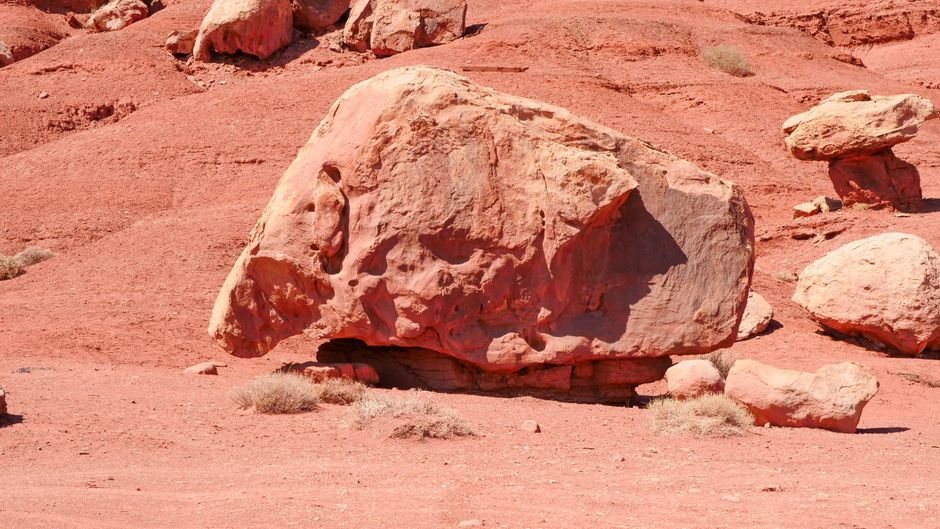
What if we told you that a seemingly ordinary rock on Mars is forcing planetary scientists to reconsider everything they thought they knew about the Red Planet? Recent observations have revealed unusually high concentrations of carbon in Martian rocks, and the scientific community is genuinely puzzled about what could have caused this.
The discovery is significant because carbon is the building block of life as we understand it. Finding substantial amounts of this element on Mars immediately raises one tantalizing question: could this be evidence of past biological activity? But before we get too excited about ancient Martian organisms, there are several other explanations that deserve serious consideration.
Why Is Carbon Such a Big Deal on Mars?
Carbon doesn’t naturally accumulate in high concentrations in typical Martian geology. The planet’s surface has been exposed to billions of years of solar radiation, cosmic rays, and chemical weathering. Under these harsh conditions, organic compounds would normally break down over time. So finding pockets of elevated carbon content is genuinely noteworthy and demands investigation.
The mysterious rock in question contains roughly three times more carbon than scientists expected to find in similar Martian samples. This isn’t just a minor variation within normal ranges—it’s a significant anomaly that requires explanation.
Could This Be Ancient Life?
The biological explanation is certainly alluring. Mars had liquid water, a thicker atmosphere, and possibly habitable conditions billions of years ago. If microbial life existed during that ancient period, fossilized remains or carbon-based residues could theoretically persist in rocks, even if degraded by time and radiation.
Did you know? Mars likely had environmental conditions suitable for microbial life roughly 3 to 4 billion years ago, making the possibility of ancient Martian biology scientifically reasonable—even if unproven.
However, detecting ancient life on Mars is extraordinarily difficult. Carbon itself doesn’t prove biological origin. We need additional evidence: specific isotope ratios, structural patterns, or chemical signatures that would distinguish biological carbon from non-biological sources.
Alternative Explanations Worth Considering
Scientists are rightfully cautious about jumping to biological conclusions. Several non-biological mechanisms could explain the elevated carbon levels:
Meteorite Impacts: Carbonaceous meteorites have struck Mars throughout its history. When these space rocks collide with the Martian surface, they deposit carbon-rich material that could accumulate in certain geological formations.
Geological Processes: Subsurface chemical reactions, geothermal activity, or mineral formation could concentrate carbon in specific rocks without requiring any biological involvement. Mars has a complex geological history with various internal processes that might create unusual chemical compositions.
Atmospheric Interactions: Ancient atmospheric chemistry might have resulted in carbon deposition on surface rocks. If Mars once had a denser carbon dioxide atmosphere—which evidence suggests it did—chemical interactions with exposed minerals could have left carbon-rich deposits.
Contamination: Though less likely, we must also consider whether the carbon might have originated from Earth during sample collection or analysis.
What Happens Next?
The real work is just beginning. Planetary scientists will conduct more detailed analysis of the carbon composition, examining isotope ratios, particle size, distribution patterns, and chemical associations. They’ll compare these characteristics with known biological and non-biological carbon sources.
Future Mars missions will likely collect additional samples from similar locations and geological contexts. Building a larger dataset will help scientists distinguish between random anomalies and meaningful patterns that might indicate past life.
This discovery reminds us that Mars still holds secrets waiting to be uncovered. Whether this mysterious carbon proves to be ancient biological material, the product of fascinating geology, or something we haven’t yet considered, the investigation itself pushes forward our understanding of planetary science and the potential for life beyond Earth.
What intrigues you more: the possibility that we might finally have evidence of ancient Martian life, or the possibility that non-biological processes on another planet can create such compelling puzzles?