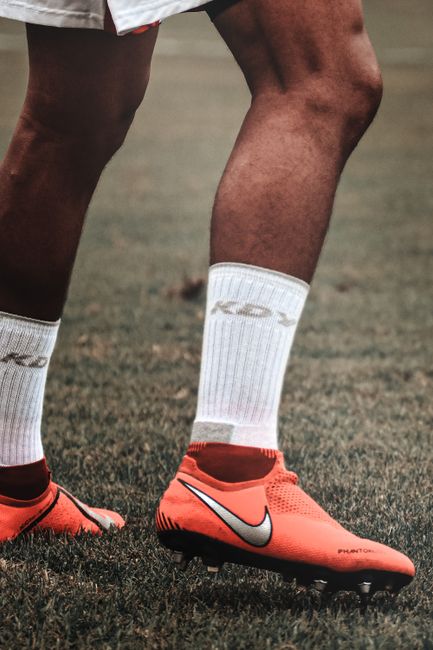
The Sock Mystery Taking Over Professional Football
Have you noticed something peculiar about elite soccer players lately? Thousands of fans watching the 2026 World Cup broadcasts have spotted an unusual trend: professional athletes deliberately cutting holes into their socks. It’s not a fashion statement, and it’s certainly not an accident. There’s actually solid science driving this seemingly bizarre decision, and understanding it reveals how obsessive players and coaches have become about optimizing every aspect of athletic performance.
Understanding Proprioception in Sport
The human body relies on something called proprioception—essentially your body’s ability to sense where it is in space and how it’s moving. Athletes who cut holes in their socks are strategically exposing their ankles and the tops of their feet to increase direct contact with air and create better sensory feedback. When players have uninterrupted skin-to-air contact, they gain enhanced awareness of their foot and ankle positioning, which translates to more precise ball control and improved agility during rapid directional changes.
Soccer demands split-second movements and explosive footwork. Players need to know exactly where their feet are at all times without looking down. By removing fabric barriers in key areas, they’re essentially sharpening their body’s natural feedback system. It’s the same principle that makes barefoot training effective—less material between your body and the environment creates stronger neurological signals.
The Temperature and Comfort Factor
Beyond proprioception, thermoregulation plays a significant role. Soccer matches demand tremendous cardiovascular effort, and players generate substantial heat during ninety minutes of competition. Traditional full-coverage socks can trap moisture and warmth around the feet, potentially increasing fatigue and discomfort during the second half.
Quick tip: Athletes dealing with foot overheating should ensure proper hydration strategies during matches, as fluid balance directly affects temperature regulation throughout the body.
By creating ventilation gaps, players allow their feet to cool more efficiently. This isn’t just about comfort—cooler feet mean less energy spent on thermoregulation, leaving more resources available for explosive movements and tactical decision-making. It’s a small optimization that, when combined with dozens of other micro-adjustments, contributes to peak performance.
Pressure Distribution and Injury Prevention
Interestingly, strategically cut socks may also influence how pressure distributes across the foot. Uniform sock pressure can create tension points and restrict natural foot expansion during activity. When players cut specific holes, they’re allowing their feet to move with greater natural freedom, potentially reducing stress on certain pressure points and lowering injury risk during high-intensity moments.
This is particularly important for the ankle area. Soccer involves constant lateral movements that put the ankle ligaments under tremendous stress. By allowing better ankle mobility and sensation, players maintain superior balance and can react faster to potential ankle-rolling situations.
Psychological Performance Benefits
Don’t underestimate the mental component either. Professional athletes are incredibly tuned to their body’s signals. When they implement a change that makes them feel more connected to their movement patterns, that confidence translates into measurable performance improvements. The cut socks become a ritual, a psychological anchor that reinforces their sense of control and preparedness on the pitch.
Coaches have noticed that players report feeling more responsive and agile when wearing modified socks. Whether this is purely physiological or partially psychological doesn’t matter much—what matters is that elite athletes are experiencing genuine improvements in how they execute technical skills.
The Evolution of Athletic Gear
This trend highlights how professional sports constantly evolve beyond what casual observers might expect. Every piece of equipment gets scrutinized for potential optimization. From shoe sole composition to sock fabric density, nothing is too small to evaluate. What started as individual players experimenting has now become a visible phenomenon at the world’s biggest soccer tournament.
Will this trend persist? Probably, at least among elite players who embrace marginal gains. As more athletes experience the potential benefits, sock modification may become standard equipment rather than an experimental curiosity. The 2026 World Cup is simply making visible what high-performance sports science has known for years: sometimes the smallest adjustments create the biggest differences.