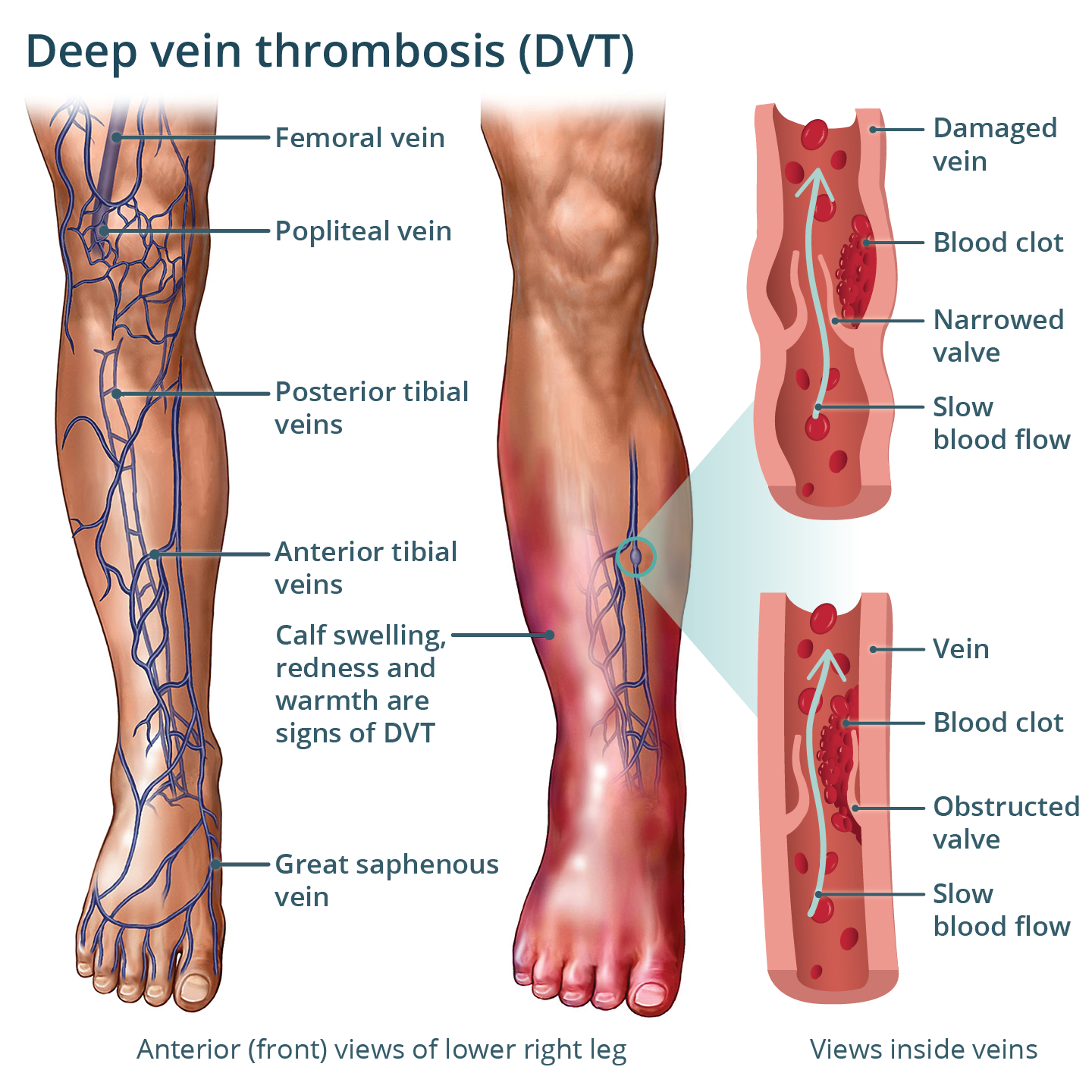
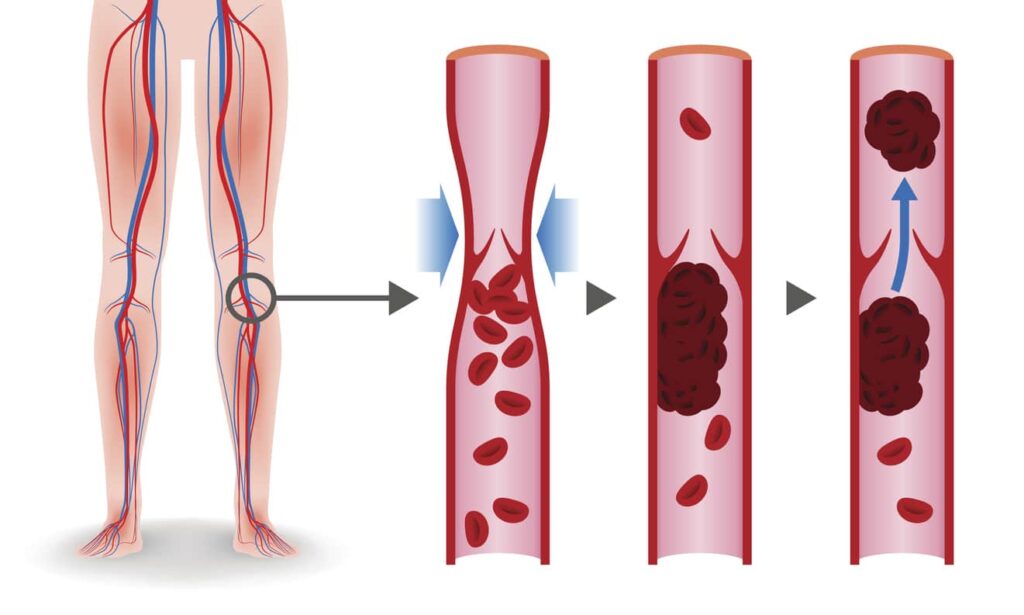
Deep vein thrombosis (DVT) is a condition in which a blood clot forms inside a deep vein, most commonly in the lower leg or thigh. Although it usually affects only one leg, DVT can occur in any deep vein in the body, including those in the pelvis or arms.
Causes
DVT happens when the normal flow of blood through the veins becomes slowed or disrupted, allowing a clot to form. Although it is more common in adults over 60, it can occur at any age.
A clot can sometimes break loose and travel through the bloodstream. When this happens, it becomes an embolus, which may block blood flow in the lungs, brain, or other organs — a potentially life-threatening complication.
Common Risk Factors
- Previous blood clots or a family history of DVT
- Long periods of immobility (bed rest, long flights or car trips)
- Recent surgery, especially hip, knee, or pelvic procedures
- Fractures of the pelvis or legs
- Pregnancy or childbirth within the last 6 months
- Obesity
- Cancer
- Smoking
- Use of estrogen medications (birth control pills or hormone therapy)
- Autoimmune conditions (e.g., lupus)
- Indwelling central venous catheters
- Blood disorders that increase clotting tendency (e.g., Factor V Leiden, polycythemia vera)
Symptoms
DVT most often develops in the veins of the lower leg or thigh. When a clot blocks or restricts blood flow, symptoms may include:
- Swelling in one leg or arm
- Warmth in the affected area
- Red or discolored skin
- Pain or tenderness, especially when standing or walking
- Sensitivity when touching the affected region
Diagnosis
A healthcare provider will evaluate symptoms, examine the affected limb, and order tests such as:
- D-dimer blood test
- Doppler ultrasound (most common and reliable test)
- MRI or CT scan (when needed to view pelvic or abdominal veins)
Additional blood tests may be performed to check for genetic or acquired clotting disorders.
Treatment
The main goal of treatment is to prevent the clot from growing and to reduce the risk of future clots.
Anticoagulant Medications
These “blood-thinning” medicines do not dissolve an existing clot but stop it from getting bigger and allow the body to gradually break it down.
Common options include:
- Heparin (IV or injection)
- Low molecular weight heparin
- Warfarin (Coumadin)
- Direct oral anticoagulants (DOACs):
- Apixaban (Eliquis)
- Rivaroxaban (Xarelto)
- Dabigatran (Pradaxa)
- Edoxaban (Savaysa)
Most patients take anticoagulants for at least 3 months, sometimes longer depending on the cause of the clot and the risk of recurrence.
Other Procedures (Rare Cases)
- Insertion of a vena cava filter to prevent clots from reaching the lungs
- Removal of a large clot or use of medication that dissolves clots (thrombolysis)
Prognosis
Many DVTs resolve without long-term issues when treated properly. However, some individuals may experience lingering symptoms such as:
- Chronic swelling
- Pain or heaviness in the leg
- Skin discoloration
- Development of varicose veins
- Post-thrombotic syndrome (damage to the vein following a clot)
Wearing compression stockings during and after treatment can help reduce these complications.
Possible Complications
- Pulmonary embolism (a clot that travels to the lungs — potentially fatal)
- Chronic pain or swelling
- Skin ulcers (rare)
- Long-term changes in skin color or texture
When to Seek Emergency Care
Call emergency services immediately if you experience:
- Sudden chest pain
- Difficulty breathing
- Coughing up blood
- Fainting or loss of consciousness
These may be signs of a pulmonary embolism.
Prevention Tips
- Move your legs frequently during long trips or periods of sitting
- Take prescribed anticoagulants exactly as directed
- Avoid smoking
- Maintain a healthy weight
- Stay active and avoid prolonged immobility