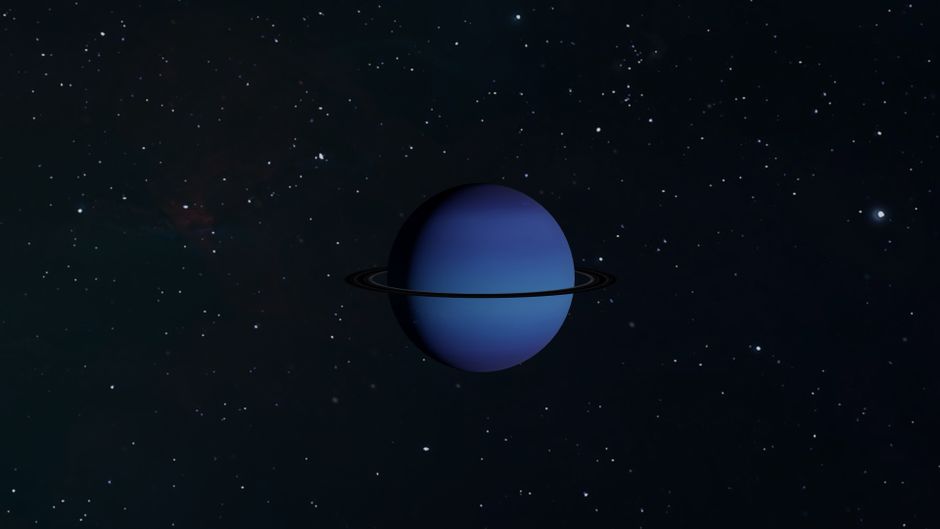
Journey Through the Universe: Exploring Stars and Planets in Virtual Reality
Imagine standing on the surface of an exoplanet orbiting a distant star, feeling the gravity pull beneath your feet as an alien sun dominates the sky above you. A decade ago, this would have been pure fantasy. Today, it’s possible thanks to immersive virtual reality experiences that bring the cosmos within arm’s reach.
The intersection of astronomy and VR technology has created something genuinely transformative. Rather than peering through an eyepiece or studying textbook diagrams, you can now step directly into the universe and explore it firsthand. These experiences aren’t just entertaining—they’re reshaping how we understand our place in the cosmos.
What Makes VR Space Exploration Different?
Traditional planetarium shows have captivated audiences for generations, but they’re fundamentally passive experiences. You sit in a dome and watch the universe unfold above you. Virtual reality flips this dynamic entirely. With a headset, you become an active participant in the exploration. You control where you look, how close you approach celestial objects, and how you navigate through space.
This sense of agency transforms learning. When you’re virtually standing next to a massive star and can see its surface convulsions in real-time, the scale and power of these cosmic objects becomes visceral in a way that no photograph can capture.
Touring the Stars Up Close
One of the most remarkable aspects of VR astronomy is the ability to visit individual stars. You can approach our sun from a safe distance and observe its corona, watch solar flares dance across its surface, and understand its gravitational dominance over our entire planetary system. But it doesn’t stop there.
Experience red giants that have swollen to impossible sizes, their surfaces roiling with nuclear fusion. Visit binary star systems where two stars orbit each other in an eternal cosmic dance. Each stellar encounter reveals something new about stellar evolution, composition, and behavior that makes textbook descriptions come alive.
Did you know? Some VR experiences are built using actual astronomical data from space telescopes and observatories, meaning you’re seeing scientifically accurate representations of real cosmic phenomena.
Landing on Exoplanets
Perhaps nothing captures the imagination quite like exploring worlds that might harbor life. VR experiences allow you to visit confirmed exoplanets based on what scientists have discovered about their atmospheres, gravity, and orbital characteristics. You might find yourself on a scorched world orbiting dangerously close to its parent star, or standing on a frozen moon circling a gas giant.
While we can’t yet know exactly what these worlds look like, VR developers create plausible environments based on astronomical data. These aren’t fantasies—they’re educated visualizations grounded in real science. It’s the difference between imagining Mars and actually walking across its rusty plains.
Inside Humanity’s Greatest Observatories
Virtual reality also opens access to places most people will never physically visit: the world’s most advanced astronomical observatories. Tour the interior of famous telescopes, understand how their instruments work, and see the actual data streams flowing from their sensors. Walk through the facilities where discoveries happen, experiencing the infrastructure that has expanded human knowledge of the universe.
These experiences often include interactive elements where you can manipulate telescope controls, adjust filters, and see how different wavelengths of light reveal different aspects of cosmic objects.
Why This Matters Beyond Entertainment
VR space exploration isn’t just entertainment—it’s an educational revolution. Students who struggle with abstract concepts suddenly grasp planetary physics. People who feel disconnected from science find their wonder reignited. Accessibility barriers that prevented many from visiting planetariums or observatories dissolve when the experience comes to your home.
As VR technology continues improving, these experiences become ever more detailed and scientifically sophisticated. They bridge