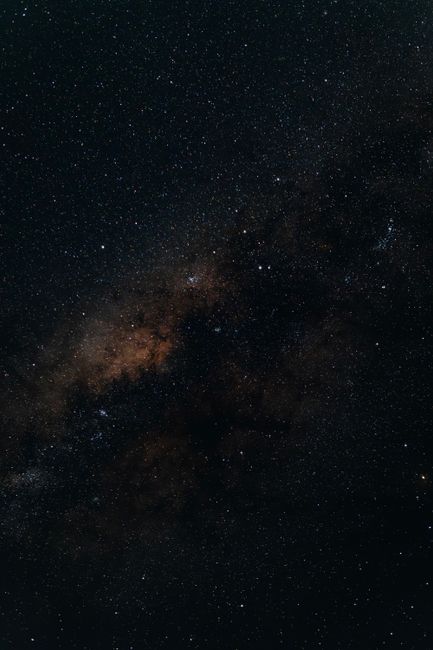
The Universe Might Not Be as Predictable as We Thought
For decades, cosmologists have operated under a fundamental assumption: zoom out far enough, and the universe looks the same everywhere. This principle, known as homogeneity, has become the bedrock of modern cosmological models. But what if this comfortable certainty is wrong?
Recent observations examining tens of millions of galaxies have revealed something unsettling: the cosmos appears to maintain large-scale structures and patterns that shouldn’t exist if the universe were truly uniform. These findings challenge one of astronomy’s most cherished assumptions and suggest we may need to fundamentally rethink how we understand the structure of reality itself.
Breaking Down the Homogeneity Problem
The concept of cosmic homogeneity is more than just an elegant principle—it’s essential to nearly every cosmological model we use today. When physicists calculate the expansion of the universe, predict the behavior of dark matter, or estimate the age of the cosmos, they rely on the assumption that matter is distributed evenly across sufficiently large scales.
Think of it like this: if you looked at Earth’s population density, you’d find huge variations between cities and oceans. But if you zoomed out to view the entire galaxy, those differences would become negligible. The universe is supposed to work similarly, with local clumpy structures averaging out to universal uniformity on cosmic scales.
Did you know? This assumption isn’t arbitrary—it’s rooted in observations and mathematical elegance. But observations, by definition, can change.
What the Data Actually Shows
When researchers mapped the distribution of millions of galaxies across the observable universe, they discovered patterns that shouldn’t be there. Galaxies showed correlations and clusterings that extended far beyond the scales where scientists expected uniformity to dominate. These patterns were subtle but statistically significant enough to demand attention.
The implications are profound. If the universe isn’t as homogeneous as we believe, then some of our most fundamental calculations about cosmic expansion, dark energy, and the universe’s fate might require revision. Models that have been refined for generations suddenly face uncomfortable questions about their underlying assumptions.
Why This Matters for Cosmology
This isn’t merely academic squabbling. The uniformity assumption underpins:
- Our understanding of cosmic expansion rates
- Interpretations of the cosmic microwave background radiation
- Models of dark matter distribution
- Calculations about the universe’s ultimate fate
If large-scale structures persist where they shouldn’t, every model built on homogeneity becomes suspect. Scientists would need to either refine their understanding of how the universe is structured or develop entirely new frameworks for interpreting cosmic data.
The Path Forward
Rather than panic, the scientific community is approaching this as an opportunity. Additional observations with newer telescopes and improved measurement techniques will help determine whether these patterns are real or artifacts of measurement. If they’re confirmed, physicists will need to explore why uniformity breaks down at these scales and what mechanisms might create such large-scale structures.
Some researchers are already proposing alternative models that could accommodate non-uniform distributions. Others are suggesting that what we interpret as non-uniformity might actually be evidence for phenomena we haven’t yet accounted for in our current theories.
The universe has a way of humbling our certainties. What we thought we understood completely often reveals hidden complexity upon closer inspection. These findings remind us that science isn’t about absolute truth—it’s about the best explanations we can construct with available evidence, always ready to evolve.
So the next time someone tells you scientists have figured out the universe, remember: they’re still puzzling over the biggest questions, and the answers keep changing.